
10. Jul 2026
Mobility data – from the data sphere to the sphere of action

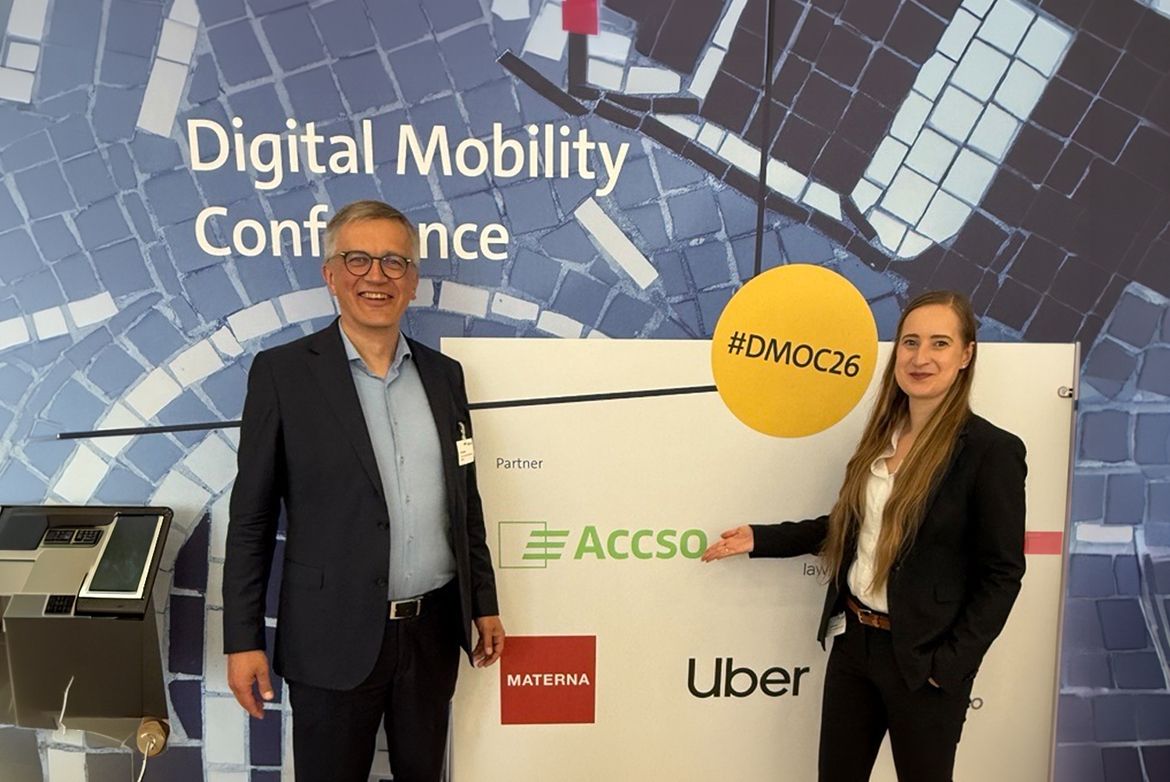
Accso brings software expertise to #DMOC26
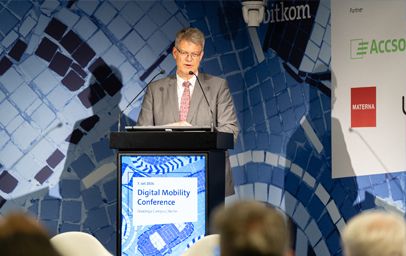
As a partner of the event, Accso was represented on site by Managing Director Ralf Kachel and Isabell Horst. Whilst Isabell Horst held numerous discussions with companies, public authorities and industry partners, Ralf Kachel shared his experiences as a speaker in a keynote address entitled: “Mobility Data Platforms & AI: From Data Space to Action Space”.
His presentation focused on how mobility data platforms and artificial intelligence can help to derive concrete courses of action from distributed data sources – ranging from traffic management and smart mobility services to data-driven business models.

Data alone does not create added value
Today, mobility data is generated at virtually every point in the transport ecosystem: in vehicles, in infrastructure, in apps and by mobility providers. However, the real added value only arises when this data is securely interconnected, intelligently analysed and integrated into operational processes.
In his presentation, Ralf Kachel demonstrated how data spaces and AI can be usefully combined. After all, it is only when data is available, trustworthy and interoperable that it can be used to make intelligent decisions – for example, to achieve more efficient traffic flows, new digital services or more sustainable mobility.
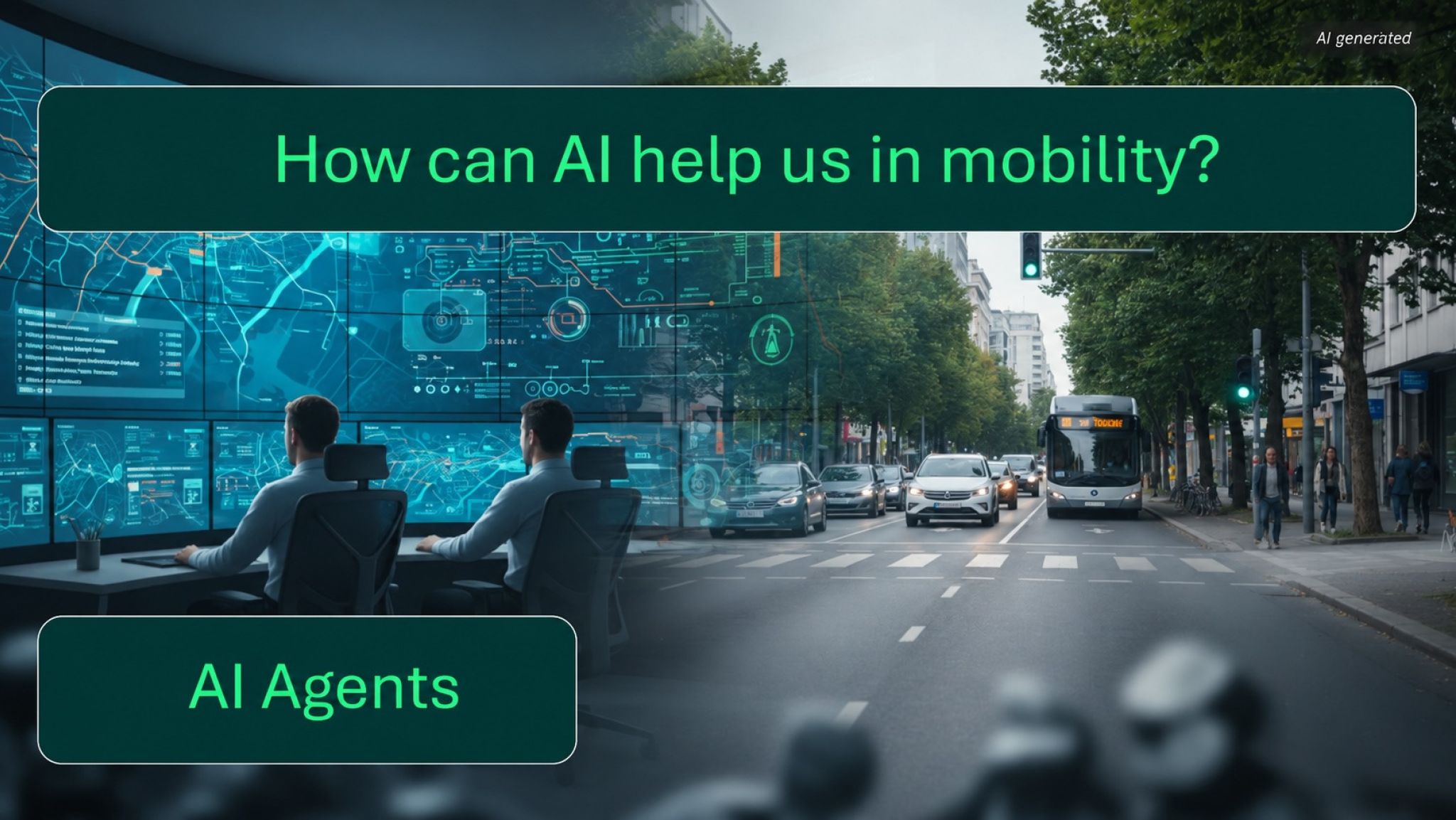
From data collection to action: How AI agents are enabling the mobility of the future
The mobility sector has made great strides in recent years in the collection, processing and visualisation of data. Data platforms, dashboards and automated alerts now provide significantly greater transparency regarding traffic conditions, infrastructure status and operational events. Yet this is precisely where a key challenge lies: today’s mobility sector is very good at measuring and reporting – but not yet sufficiently adept at acting on this information. After all, an alert does not in itself constitute an action.
Traditional IT systems continue to play an important role: they reliably map out familiar processes, rules and standard situations. However, their limitations become apparent when unexpected and dynamic events occur – such as cascading effects caused by extreme heat, severe weather or the failure of critical infrastructure. Such situations cannot be fully programmed in advance, as not every possible development is foreseeable.
This is where AI agents come in. They establish a link between an event and a specific action by interpreting information, evaluating options and – within defined limits – triggering actions.
The basic pattern is: Event → Agent → Decision → Action
However, for data to actually translate into the ability to act, AI agents in the mobility sector need more than just access to data. Three further building blocks are crucial:
Context for decision-making: The agent must understand the situation at hand, the applicable constraints and the implications of possible actions.
Guardrails: Clear rules must be defined regarding which decisions an agent is permitted to make independently, when approval is required and who bears responsibility.
- Capacity to act: Through system integrations, the agent must be able not only to propose measures but also – where permitted – to implement them.
This is precisely where the concept of Operational AI comes in: AI agents are not viewed in isolation as a technology, but are integrated into existing operational processes, role models and responsibilities. They support staff in their day-to-day work – with transparent decisions, defined approvals, controlled implementation and continuous monitoring.

The digital twin – or simulation – plays a key role in this context. It serves as a testing and evaluation environment before real-world measures are implemented. This allows potential courses of action and side effects to be analysed – for example, what consequences a bridge closure would have for the entire transport network and how alternative control measures would play out.
The vision is therefore to evolve from today’s data space into a space for action: a mobility system that not only recognises events but can also respond to them in a controlled manner. AI agents, simulation and clear governance lay the foundations for a mobility system that is more resilient, more proactive and better aligned with the actual needs of operators and those affected.
Shaping digitalisation together
As a software engineering company, Accso has been supporting organisations with challenging digitalisation projects for many years. In the mobility sector in particular, new requirements are currently emerging in the areas of data management, platform architectures and intelligent applications. The Digital Mobility Conference provided the ideal setting for exchanging experiences, gaining new insights and strengthening existing partnerships.
Would you like to discuss mobility data platforms, AI or digital mobility solutions?
Ralf Kachel and
Isabell Horst look forward to speaking with you. Together, we develop software solutions that create real added value from data and actively shape the mobility of tomorrow.
Contact us for a no-obligation consultation!