30. Jan 2026
Accessibility testing for the integration of all

Digital accessibility does not begin with tools or checklists, but with understanding the needs of the people who use our applications. Only when we recognize where barriers arise can we take targeted measures to make digital products more inclusive. This shift in perspective from the mere functioning of an application to its actual accessibility forms the basis for sustainable accessibility strategies.
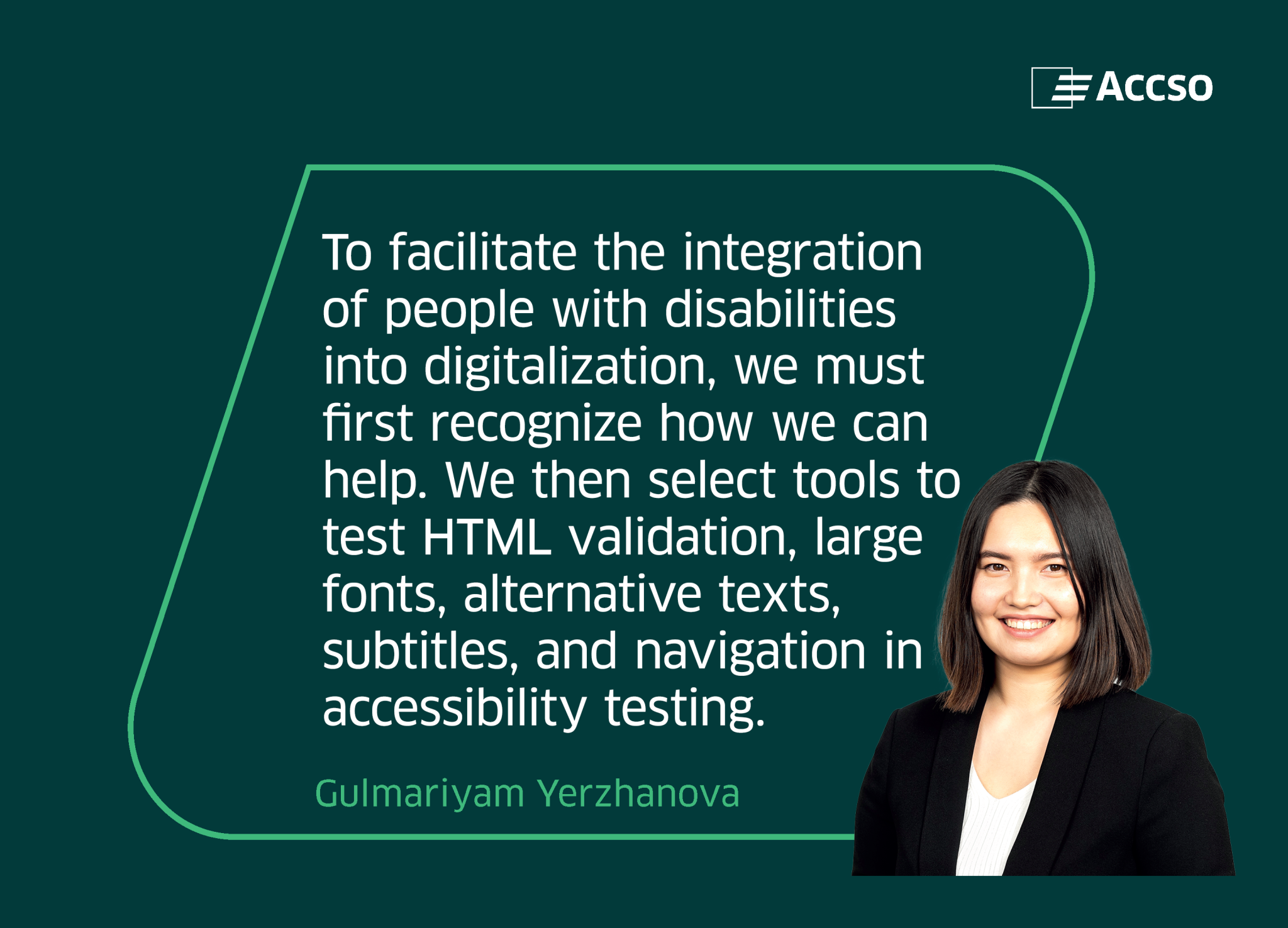
Once it is clear what barriers exist, specialized tools help to specifically check whether an application is truly accessible to everyone. HTML validation tools help to avoid structural errors that could throw screen readers off track. Options for large fonts make it easier for people with visual impairments to use the site. Alternative texts make sure that visual content can be understood even without being visible, while subtitles and transcripts are essential for users with hearing impairments. Last but not least, navigation plays a key role: it must be clear, logical, and easy to use without unnecessary hurdles.
Accessibility is not an add-on that is “quickly taken care of” at the end of a project, but a quality feature that should be taken into account throughout the entire development process. Those who understand the needs of different user groups early on and use the right testing tools create digital products that not only work, but also give everyone the access they deserve.