16. Jan 2026
Comprehensible test code as the foundation for stable quality across many development cycles

One of the biggest challenges in software development does not arise when writing new features, but rather in the long-term maintenance and expansion of existing systems. The importance of a clear structure and good comprehensibility quickly becomes apparent, especially in the area of testing. If test code is structured in a comprehensible way—clearly named, logically grouped, and easily expandable—it forms the foundation for stable quality across many development cycles.
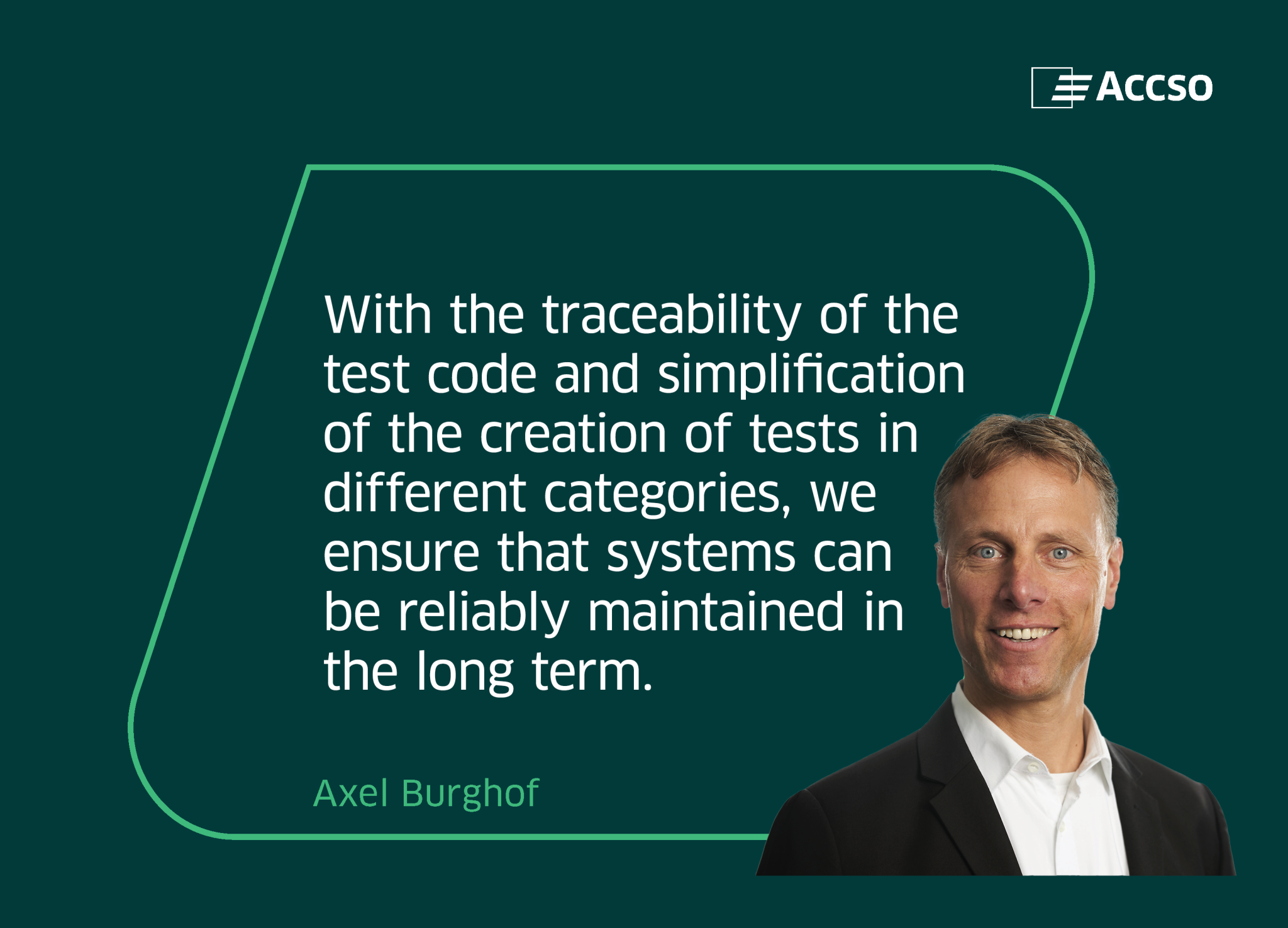
It is particularly important that tests of different categories, such as unit, integration, or end-to-end tests, can be easily created and clearly distinguished from one another. Uniform patterns, clear conventions, and well-documented examples help teams set up new tests quickly without having to start from scratch every time. This not only saves time but also prevents misunderstandings and duplication in the test inventory.
The easier it is to understand tests and add new ones, the more reliably a system can be maintained over the years. Changes in the code can be evaluated more quickly, errors detected earlier, and risks better assessed. At the same time, the entire team's confidence in the test base grows, which is a key factor for stable releases and long-term product quality.
So, by relying on comprehensible test code and efficient test creation methods, you lay the foundation for robust, flexible, and future-proof systems.